Who Actually Owns Downtown Jersey City's Murals?
October 1, 2026
October 1, 2026
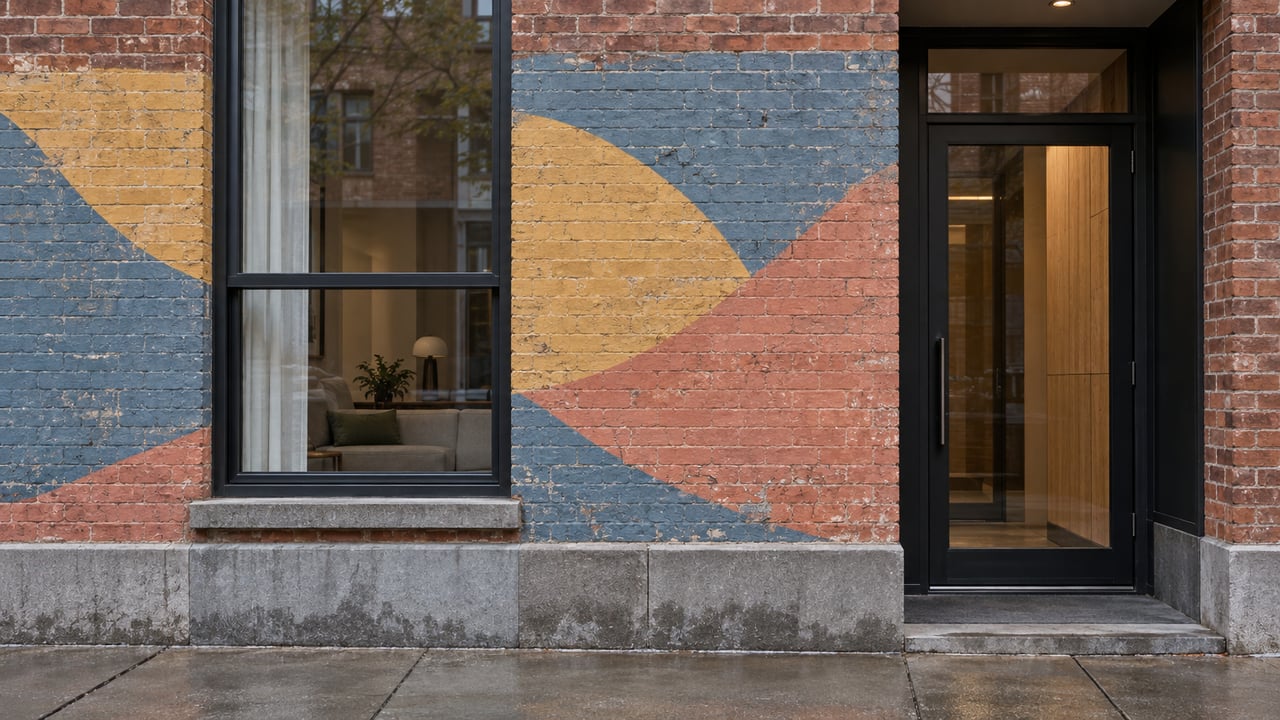
Stand at Grove Street and Christopher Columbus Drive on a weekday morning and you'll watch commuters stream past Shepard Fairey's Jersey City Wave without breaking stride. Ask one of them who owns that wall and most will guess the city. It isn't. The wall belongs to whoever owns the building, and the mural is there because that owner said yes to an artist for a season, a year, or as long as the building stands. Nothing about downtown's public art collection is public in the way a park bench or a street sign is public. Every piece you pass on your walk to the PATH station exists because a private property owner agreed to it, which means every piece can end the same way it started: with someone else's decision.
That distinction matters more in Downtown Jersey City than almost anywhere else the murals appear, because downtown is also the part of the city where buildings change hands and change shape the fastest.
The Jersey City Mural Arts Program started in 2013 as a Mayor's Office initiative, originally funded through a Clean Communities Grant, with a simple structure: connect artists with the people who own walls, whether that's a homeowner, a landlord, a developer, or a school. The JCMAP website now lists more than 200 murals across the city, and the program has grown into one of the more expansive municipal public art efforts in the country. But the mechanism hasn't changed since 2013. JCMAP brokers introductions. It doesn't hold title to anything.
That's why the collection reads less like a museum and more like a running conversation between artists and whoever currently controls a given facade. A property owner downtown who says yes to a mural today isn't making a permanent commitment. They're making a decision that lasts exactly as long as their plans for that building stay the same.
The densest concentration of this work downtown sits within a few blocks of the Grove Street PATH station and the Newark Avenue pedestrian plaza, which is also the most-walked stretch of the neighborhood.
| Piece | Artist | Location |
|---|---|---|
| Jersey City Wave | Shepard Fairey | Christopher Columbus Drive & Grove Street |
| Black Sheep | Pixel Pancho | 141-143 Christopher Columbus Drive |
| Intuition | Marina Zumi | 172 Newark Avenue |
| Untitled | Nate Frizzell | 176 Newark Avenue |
| Jersey City Crown | Beau Stanton | 266 Newark Avenue |
| David Bowie mural | Eduardo Kobra | 837 Jersey Avenue |
| Wendy at the Window | Julien "Seth" Malland | between Grove Street and Marin Boulevard |
Most residents who've lived here a year or two already know Fairey's Wave and Kobra's Bowie tribute, the two pieces that show up in nearly every visitor's photo roll. Fewer people clock Zumi's three-story cosmic piece at 172 Newark, painted as a nod to the Liberty Science Center's planetarium a few blocks away, or Stanton's Jersey City Crown at 266 Newark, which weaves together the old city hall and the Central Railroad of New Jersey terminal into a single skyline. These aren't decorations added after the fact. Several were commissioned specifically because a building owner wanted their wall to say something about the neighborhood at that moment.
Which is the part worth sitting with. A mural on Newark Avenue isn't just art. It's a snapshot of what a property owner wanted associated with their building in the year it went up. Change the owner, and you change the appetite for what stays on the wall.
Downtown Jersey City doesn't lack for examples of walls changing hands quickly. In January 2026, demolition finished at 195 Grand Street, the longtime home of Golden Cicada, a Jersey City institution that had served baijiu shots on that corner for close to four decades. The site, assembled by the developer Silverman across several adjacent lots, is being cleared for a two-tower project that will include school space and affordable housing. That's a few blocks south of the Newark Avenue plaza, inside the same downtown footprint where most of the mural corridor sits.
Golden Cicada's building wasn't a mural site. But its demolition is a useful data point about how fast walls turn over on these blocks, and murals live on exactly the kind of walls that turn over: older buildings, small footprints, single-owner properties that are often the first to draw a developer's interest when a corridor gets hot. One artist working in the Jersey City scene, quoted by the Hudson Reporter this past winter, described the arrangement as painting "on borrowed walls." That's not a complaint about the program. It's an accurate description of the deal every muralist downtown has made, whether they've thought about it in those terms or not.
The program's own history includes pieces that no longer exist in their original form. Raul Rubio repainted his Train and Indian mural on Grand Street in 2022, years after the original 2014 version, not because the wall moved but because the piece itself was refreshed. That kind of turnover is normal and doesn't require a demolition permit. A property being demolished, on the other hand, is the version of change that actually erases a piece rather than updating it.
None of this means the collection is shrinking. It means it's turning over, and new work replaces what disappears more often than not. The Jersey City Youth Mural Arts Program, JCMAP's youth-focused offshoot, marked its 11th anniversary last October with an exhibition and documentary premiere at Mana Contemporary on Newark Avenue. The program trains Jersey City residents ages 15 to 25 in every stage of mural-making, from concept sketches to long-term surface preservation, and has become the largest youth mural apprenticeship program in the state. Mayor Steven Fulop, at that anniversary event, called the program proof that investing in the arts is an investment in the city's future. Whatever you make of civic messaging, the practical effect is real: a new cohort of muralists trained on Newark Avenue every year, ready to paint the next wall that becomes available.
That's the fuller picture. Downtown's mural collection isn't a fixed inventory you can check off a list once. It's closer to a currency that circulates through the neighborhood's private property, added to by property owners and artists making new deals, and occasionally subtracted from when a building's future changes. The JCMAP interactive map is a good starting point for a walk, but treat it as a snapshot of a given week rather than a permanent directory. A piece that was there when the map was last updated might already be gone, and a wall that's blank today might have something new on it by spring.
If you've walked past the same murals for years without wondering who actually controls the wall behind them, that's worth a second look next time you're on Newark Avenue. The art is public. The real estate underneath it isn't, and that's exactly what keeps the collection changing.
If you're curious what's happening to the buildings behind these walls, whether one of them is coming up for sale or you're weighing a move into the corridor yourself, Jessica Williams can walk you through what's actually changing on these blocks, mural by mural and building by building.
This article is general information, not legal, tax or financial advice. Consult a qualified professional about your situation.
Stay up to date on the latest real estate trends.

Jessica builds trust with each and every client, making their interests the central focus of each and every transaction. This loyalty is often rewarded through repeat clients and extensive referrals, creating an ever-growing network of high-profile clientele with very similar real estate needs. Contact her today!