
The NJ Mansion Tax Change Every Weehawken Waterfront Seller Needs to Know
September 3, 2026
September 3, 2026
Picture two nearly identical three-bedroom units at Henley on Hudson, both under contract in the same month. One closes at $2,490,000. The other closes at $2,510,000, a difference smaller than a kitchen renovation. Under the New Jersey Division of Taxation's current Graduated Percent Fee schedule, that $20,000 gap in sale price can produce a tax swing of more than $12,000 for the seller, because the tax rate doesn't apply to the amount above a threshold. It applies to the entire price, the moment you cross into the next bracket. For anyone listing a waterfront condo or townhouse in Weehawken above $1 million, that mechanic now matters more than the list price itself.
According to Saul Ewing, New Jersey's so-called mansion tax has existed since 2004 as a flat 1% fee on residential sales over $1 million, paid by the buyer at closing. That structure ended when Governor Murphy signed Bill S4666/A5804 into law, restructuring the fee in two ways: the payment obligation shifted from buyer to seller, and the flat 1% became a graduated schedule that climbs as high as 3.5% for the most expensive transfers.
The new rules took effect July 10, 2025, for any contract executed on or after that date. There was a brief transition window for deals already under contract, as New Jersey REALTORS® explains, allowing sellers to seek a refund on tax paid above the old 1% rate if the deed recorded by November 15, 2025. That window closed last November. Every waterfront sale in Weehawken today operates under the new framework, full stop.
Here's the graduated schedule as it stands now:
| Sale Price | Seller's Rate |
|---|---|
| More than $1,000,000 through $2,000,000 | 1% |
| More than $2,000,000 through $2,500,000 | 2% |
| More than $2,500,000 through $3,000,000 | 2.5% |
| More than $3,000,000 through $3,500,000 | 3% |
| Above $3,500,000 | 3.5% |
For most of the country, this table is abstract. In Weehawken's Port Imperial corridor, it's a map of actual inventory. Henley on Hudson's final-phase residences were originally priced between $799,000 and $2.5 million, which means a meaningful share of that community's larger three-bedroom and penthouse units sit at or near the top of the 1% and 2% brackets by design, not by accident. A three-bedroom penthouse there sold for $3 million in September 2024, squarely in the 2.5% tier. Townhouse-scale sales have gone even higher still, including a $4.9 million transaction Jessica Williams handled at the community in 2023, a price point that would land in today's top 3.5% bracket.
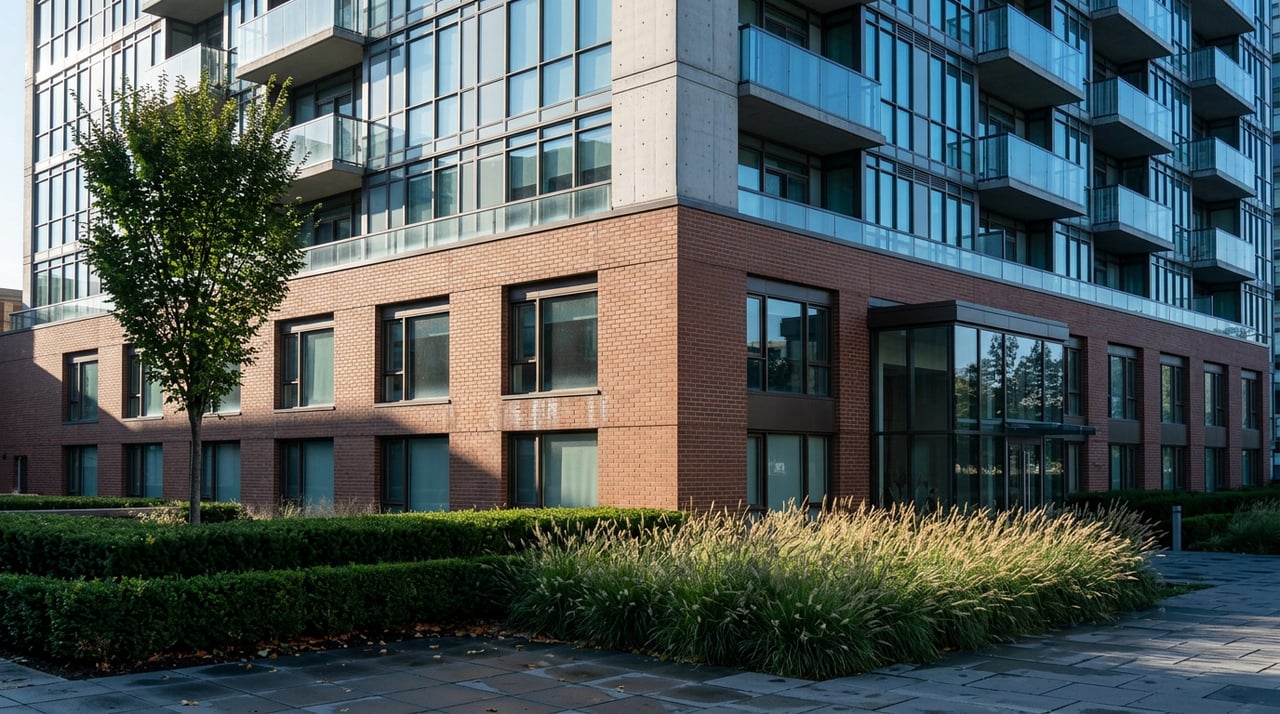
At Avora, the newer glass tower at 800 Avenue at Port Imperial, most one- and two-bedroom units trade well under $2 million, but the building's three-bedroom penthouses and duplexes routinely cross that line. One two-bedroom unit there sold for $1.9 million in August 2024, close enough to the $2 million threshold that a modest bidding war could have pushed it into a different bracket entirely.
Then there's The Brownstones at Port Imperial, 42 ultra-luxury townhomes spanning roughly 2,700 to 4,600 square feet. Properties of that size and finish level in this location are the ones most likely to land in the 3% and 3.5% tiers, where the tax bill on a single sale can run into six figures.
The detail that catches sellers off guard isn't the existence of higher rates. It's that each rate applies to the whole sale price, not the marginal amount above the threshold. A property that sells for exactly $2,000,000 owes $20,000 in tax under the 1% tier. A property that sells for $2,020,000, just $20,000 more, jumps to the 2% tier and owes $40,400. The seller nets less from the higher offer once the tax is applied, a genuine dead zone right at each bracket boundary.
This is not a hypothetical drawn from another state's market. It's the exact price range where Henley on Hudson's top units, Avora's penthouses, and most of The Brownstones already sit. A seller negotiating a final offer at $2,495,000 versus $2,505,000 is negotiating over which side of a $12,000-plus tax line the deal lands on, and the buyer, no longer responsible for any portion of the tax, has less reason to care which side it is.
That last point deserves its own sentence, because it reverses a dynamic that shaped every Weehawken transaction for two decades. Under the old rules, buyers absorbed the 1% fee and had some incentive to keep price low. Now that the entire burden sits with the seller, buyers can push for a higher gross price with no legal tax obligation of their own, while the seller quietly loses more of it to the state. Anyone pricing a listing near $2 million, $2.5 million, or $3 million right now needs to model net proceeds at both sides of the threshold before setting an asking price, not after an offer comes in.
Not every transfer triggers the tax. The Matus Law Group lists these New Jersey exemptions, some of which may be relevant for long-tenured waterfront owners:
For a family selling a unit inherited from a longtime Weehawken owner, or transferring a property between generations before a sale, these carve-outs can matter more than the bracket table above. They don't apply to a standard arms-length resale, which covers the overwhelming majority of Port Imperial transactions.
The tax structure isn't just a resale story. It's also the backdrop for the newest inventory entering the market. 1800 Avenue at Port Imperial, a 282-unit building designed by Handel Architects with a curved glass facade, is rising on what's been described as the final open waterfront parcel in Weehawken, with Christie's International Real Estate Group handling sales and marketing. The building's construction timeline targeted a summer 2026 completion, which puts its first closings arriving right around now, meaning the building's first wave of owners, and eventually its first resales, will operate entirely inside the current tax framework from day one.
For buyers who close on a unit there in the $2 million to $3.5 million range and later decide to sell, there's no ambiguity about which rules apply. The bracket table above is simply how the math works, from day one of ownership. Sellers who understand this now, before they list, are in a stronger position to negotiate a final price that actually protects what they take home.
Does the buyer still pay anything toward this tax? Not by law. Under the current law, the entire graduated fee sits with the seller at closing. Buyers are no longer legally responsible for the 1% they historically paid.
Is there still a grace period for contracts signed before the change? That transition window closed on November 15, 2025. Deeds recorded now fall under the current seller-paid, tiered structure, subject to the exemptions described above.
Does this apply to co-ops as well as condos? Yes. The law covers residential property broadly, including condominiums and cooperative units, alongside single-family homes.
Can a seller negotiate the buyer to cover part of the tax? Nothing in the law prevents that as a private negotiation between the parties, though the legal obligation to remit the tax at recording still rests with the seller.
The mansion tax overhaul didn't just raise costs for sellers at the top of the market. It rewired the incentive structure at exactly the price points where Weehawken's waterfront inventory concentrates. A listing strategy that ignores where a final offer lands relative to these brackets risks leaving real money on the table, money that has nothing to do with the property's finishes or view and everything to do with a threshold on a state tax schedule.
If you're weighing a sale at Henley on Hudson, Avora, The Brownstones at Port Imperial, or any of the waterfront buildings along this stretch of the Gold Coast, the net proceeds conversation needs to happen before the price gets set, not after an offer arrives. Contact Jessica Williams for a private consultation to price your Weehawken waterfront property with this bracket structure built into the strategy from the start.
This article is general information, not legal, tax or financial advice. Consult a qualified professional about your situation.
Stay up to date on the latest real estate trends.




Jessica builds trust with each and every client, making their interests the central focus of each and every transaction. This loyalty is often rewarded through repeat clients and extensive referrals, creating an ever-growing network of high-profile clientele with very similar real estate needs. Contact her today!