Pricing Penthouses Versus Standard Units In Hoboken
June 25, 2026
June 25, 2026
If you are pricing a Hoboken penthouse the same way you would price a standard condo, you could leave serious money on the table or miss the market entirely. In a city where buyers move quickly, top-floor homes often compete on a different set of value drivers than the rest of the building. Understanding that difference can help you price more strategically, negotiate more confidently, and protect your net proceeds. Let’s dive in.
Hoboken remains an active condo market, which matters whether you are selling a penthouse or a more typical unit. Recent market data showed 111 condos for sale, a median listing price of $926,000, and a median 25 days on market. Broader Hoboken housing data also showed a median sale price of $998,902, a 102.1% sale-to-list ratio, and 52.8% of homes selling above list.
Those numbers tell you demand is real, but they do not mean every condo should be priced the same way. A penthouse is usually a scarcer product with more individualized value. That is why pricing at the top end needs more nuance than using a simple building average or a broad price-per-square-foot shortcut.
The biggest pricing mistake sellers make is assuming a penthouse premium comes from square footage alone. In reality, buyers often pay for a bundle of features that create a different living experience. In Hoboken, that can mean skyline exposure, water views, privacy, ceiling height, outdoor space, and top-floor positioning.
Research on high-rise housing supports this idea. View quality consistently shows up as a priced amenity, with partial views carrying about an 11% premium and full views about a 22% premium compared with no-view units. Water views also tend to rank at the top of the view-premium hierarchy, which is especially relevant in Hoboken’s waterfront and near-waterfront buildings.
In many Hoboken luxury buildings, the view is not just a nice extra. It is part of the core value proposition. A direct Hudson River or skyline exposure can change how a home feels and how buyers compare it to other available units.
That is why two homes with similar square footage can command very different prices. If one has open, protected sightlines and the other looks into a neighboring structure or has more limited exposure, buyers will usually notice that difference immediately. The pricing strategy should reflect the quality, openness, and permanence of the view corridor.
Not all views deserve the same premium. A sweeping, unobstructed exposure is different from a side-angle glimpse or a view that may be partly blocked by adjacent buildings. When pricing a penthouse, you need to identify whether the view is truly superior or simply better than average.
This is one reason same-building comparisons are so important. A penthouse with a front-facing water view may deserve a stronger premium than a top-floor unit on the rear side of the same building. The market tends to reward the actual experience, not just the label of “penthouse.”
Higher ceilings can have an outsize effect on how spacious a home feels. Research shows that rooms with higher ceilings are more likely to be judged beautiful and more spacious, even when square footage does not change. In luxury condos, that perceived openness can influence both showing feedback and final pricing.
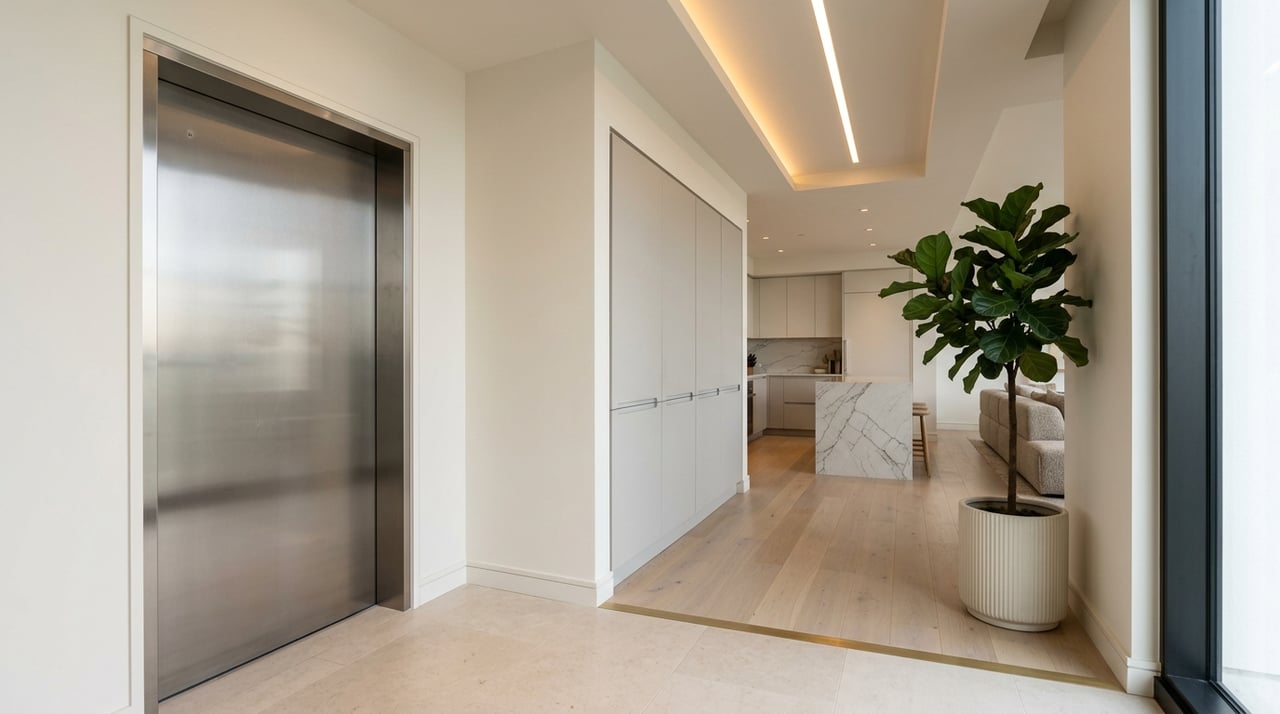
This matters because penthouses often include ceiling heights that stand apart from standard units below. If your home offers more volume, more light, and a stronger sense of openness, that should be part of the pricing story. It may not always show up in a basic spreadsheet, but buyers often respond to it right away.
In a dense urban market, private outdoor space carries real value. Research has found that balconies can contribute about a 4% premium, with stronger effects when paired with sea views. In Hoboken, a usable terrace, roof deck, or oversized balcony can become one of the most marketable parts of a penthouse.
The key word is usable. A narrow balcony that barely fits a chair does not compete with a large terrace that supports dining, lounging, or entertaining. Pricing should account for the scale, privacy, and connection between outdoor space and the home’s view exposure.
Penthouse buyers are often paying for more than finishes. They are also paying for a sense of separation from the rest of the building. Top-floor positioning, fewer neighbors, and a quieter setting can all support stronger pricing when compared with standard units.
Research also suggests that floor-level premiums do not increase in a straight line forever. In other words, being higher usually helps, but the premium tends to vary by building and level. Features like private or keyed elevator access may strengthen the appeal, but they should still be tested against recent comparable sales in the same building or a very similar one.
A standard condo is usually easier to benchmark because there are often more direct comparables. If the building has multiple recent sales with similar layouts, exposure, and condition, pricing can be more straightforward. Buyers also tend to treat these homes as more interchangeable than a one-of-a-kind penthouse.
That does not mean pricing is simple. It means the comp set is often deeper and the adjustments are usually smaller. For standard units, price per square foot may be more useful, though it still should not be the only tool.
For penthouses, the best comp set is usually the same building or a very similar nearby building. That is especially true in Hoboken’s waterfront and near-waterfront locations, where view lines, terrace size, parking, and building design can shift value quickly. A broad neighborhood average can blur those differences.
The strongest comparisons usually look at the same stack, line, and exposure whenever possible. Then you can adjust for features like ceiling height, outdoor space, parking, elevator configuration, and any obstruction to the view. This approach gives you a more accurate answer than averaging every condo sale in the building.
Price per square foot is useful, but it should never be the whole story for a penthouse. Two units may have similar dimensions but offer very different experiences in light, openness, privacy, and view quality. Those differences often drive buyer behavior in luxury sales.
If you rely too heavily on a simple per-square-foot benchmark, you risk underpricing a truly special unit or overpricing one whose premium features are less compelling in context. In Hoboken, that distinction matters because buyers at the upper end are usually comparing quality as much as quantity.
Hoboken’s waterfront setting adds another layer to pricing. The city describes itself as an urban coastal community that is especially vulnerable to climate change, and it continues to invest in resilience planning, waterfront access, parks, and the Hudson River Waterfront Walkway. Buyers often appreciate the waterfront lifestyle, but they may also look more closely at the building’s site and resilience profile.
That does not erase a penthouse premium. It means buyers may ask more detailed questions about the building, the location, and how the property fits into a flood-prone area. A strong pricing strategy should recognize both the lifestyle appeal and the added scrutiny that can come with waterfront ownership.
In New Jersey, sellers pay the Realty Transfer Fee, and a Graduated Percent Fee applies to residential transfers above $1 million. That fee starts at 1% from $1 million to $2 million and rises on higher price tiers. For penthouse sellers, this makes net proceeds a critical part of pricing strategy.
That is one reason the final negotiation range matters more at the luxury end. A seller deciding between two pricing paths should look at what each path means after fees, not just at the headline sale price. For many standard units below that threshold, the pricing conversation is less affected by this issue.
A strong penthouse pricing strategy usually starts with discipline, not optimism. You want to identify what features the market is most likely to pay for in your specific building, then support those conclusions with recent comparable sales. In Hoboken, the most evidence-backed premium drivers are view quality, floor position, ceiling height, outdoor space, and privacy or access features.
From there, the pricing story should be tailored to your exact stack and exposure. That means asking practical questions such as:
When these answers are clear, list pricing becomes more strategic and easier to defend during negotiation.
A penthouse in Hoboken should usually be treated as its own submarket, not as a larger version of a standard unit. The premium is often tied to a specific mix of view, height, outdoor living, privacy, and overall experience. The challenge is proving which of those features are truly monetizable in your building and which are simply nice to have.
That is where local waterfront pricing knowledge becomes valuable. In a market where many homes move quickly, pricing a differentiated luxury property still requires precision. The right strategy can help you capture the premium your home deserves without losing momentum in the market.
If you are weighing how to position a penthouse or high-end condo along the Hoboken waterfront, Jessica Williams can help you evaluate the right comp set, pricing strategy, and negotiation approach for your property.
Stay up to date on the latest real estate trends.

Jessica builds trust with each and every client, making their interests the central focus of each and every transaction. This loyalty is often rewarded through repeat clients and extensive referrals, creating an ever-growing network of high-profile clientele with very similar real estate needs. Contact her today!